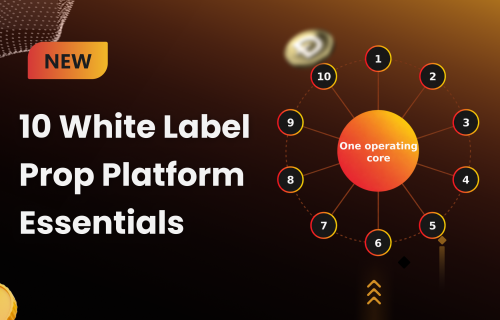
The best white-label platform decisions start with the operating model. A firm needs one clear path from registration to an account decision, supported by rules that traders and operators can understand.
Launching a prop firm places the trading screen inside a wider account journey. A white-label prop trading platform needs to connect account states and risk decisions with trader communication and the financial operations around them. When those functions sit in separate tools, a rule change becomes manual work and a trader question sends several teams back through the same evidence.
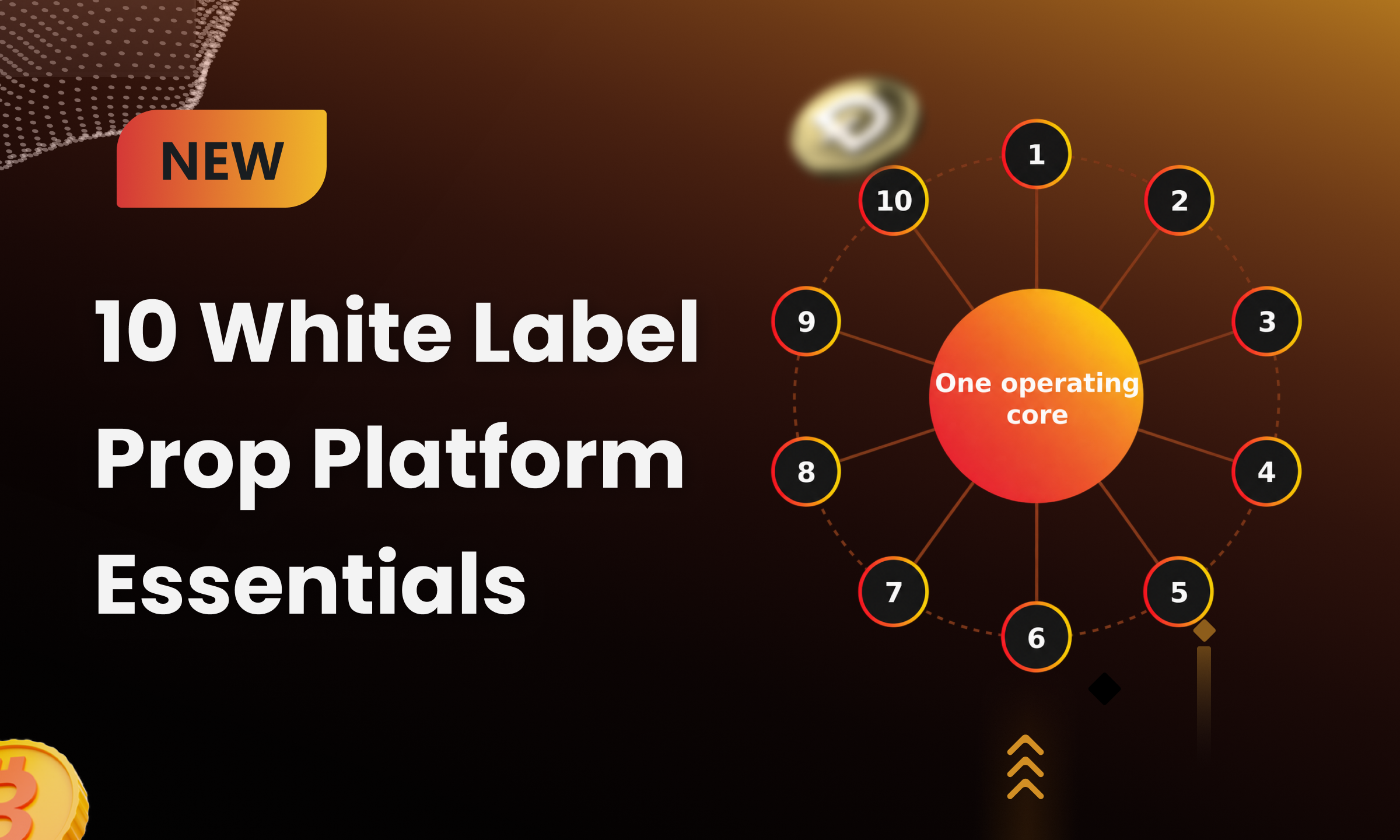
For an operator, a white-label prop trading platform can bring those workflows into one operating core while leaving the proposition in the firm’s hands. The following ten capabilities offer a practical way to compare providers.
The trader experience should carry the firm’s identity through the portal and account journey. Configurable brand elements should align with challenge naming and customer communication. The same clarity should carry into status messages and support paths.
The platform should support a clear path from registration to account creation. Eligibility checks can happen before payment confirmation, followed by account creation and welcome communication. Pending payments and incomplete verification need a visible route to resolution so a trader knows where to find help before an account is issued.
Challenges need executable rules that reflect the product proposition. Each phase needs a clearly defined target, alongside performance limits and a defined account outcome. Versioning makes it possible to explain which rule set applied to a specific account.
This is the foundation for a clear product proposition and a challenge journey that can be explained consistently.
A prop program needs a useful set of account states. It should carry an account from registration through evaluation and review to progression or retry. Later decisions, including payout or suspension, need equally clear states. Manual exceptions also need a record that the trader, support team, and operator can interpret consistently. How a supplier handles those transitions is central to choosing a prop trading technology provider. That discussion shows whether the workflow remains clear when an account needs manual review.
Trading access has to fit the intended market and account model. The available connections should make clear where the trading environment ends and the challenge system begins. Account status and risk decisions need to remain coherent as trading activity changes.
Risk rules need a clear calculation logic if they are to run automatically and support investigation when a breach occurs. The calculation basis and update frequency should be understood before the firm sets how open positions are treated. A useful implementation makes the configured rule and its operational outcome easy to distinguish.
Operators should also understand the difference between static and trailing drawdown rules, because the calculation design affects both product communication and monitoring.
The dashboard should help traders understand their current stage and progress. Applicable rules need to appear alongside relevant account activity. When information is current and consistent with the operator’s back-office record, the product becomes easier to use and routine support demand can fall.
Operations teams need a way to see account status and risk events in one place. The workspace should surface reviews and exceptions alongside the relevant configuration. When a case needs action, the operator should be able to retrieve its evidence and record the outcome.
Payment collection is one part of a wider financial workflow. Account activation should reflect payment status, and payment exceptions need a clear resolution path. Payout eligibility should lead into an approval process whose account record and trader communication make clear where human review begins.
A white-label prop trading platform depends on connections beyond the trading environment. It needs a clear view of its CRM and identity-service dependencies, as well as the transaction and support systems around it. Strong integration design protects data boundaries and gives the operating team the visibility it needs.
For teams still weighing an in-house build against a white-label platform, these boundaries show how each path distributes responsibility.
When comparing a white-label prop trading platform, use the list to capture why each capability matters and who relies on it. Add the evidence you need from a provider when the normal flow changes. It gives provider conversations and demos a practical focus: the trader journey and rules your firm needs to run.
Book a demo to review your prop platform requirements.
days left to apply
Tell us about your project and we’ll schedule a demo with our product specialists.
By submitting, you agree to our privacy policy and consent to being contacted about opportunities.