

When you compare traders, the same profit can come from very different trading decisions. A useful prop firm trader evaluation looks at the route as well as the result, so you can see how much risk an account took and how it behaved around your rules.
Profit still matters. A prop firm reporting workflow can put that number in context by showing the account’s drawdown and concentration. It can then reveal patterns in position size or rule events before the next account decision.
Before you choose metrics, start with the question behind your report. You may want to understand whether a trader’s results hold up across several days. You may be looking at how closely the trader followed your program rules. A clear question tells your team which data is worth collecting and how to read it.
Use your account workflow to decide which accounts belong in the comparison. A score is useful when you can explain what it measures. Be clear about its limits and how it informs an account decision.
Look at the largest drawdown in the review period, then ask how close it came to your program boundary. The account’s path back from that drawdown adds another useful detail. Use the same definitions as your program’s static or trailing drawdown rules, otherwise a comparison can point in the wrong direction.
Watch how exposure changes from trade to trade and over the review period. A trader who keeps position size in a familiar range may be taking a different path from one whose result depends on a few unusually large positions. Set the relevant baseline before you compare accounts.
One trade or one instrument can carry a large share of a final gain. Check that share alongside the total. That gives the reviewer a clearer picture of how concentrated the result is.
A warning or breach adds useful context to a trading record. Note any manual intervention with the account too. The same record can show a pause, an exception, or later support history. The reviewer can then see the behavior against the rules that applied at the time.
Ten active days and two active days can produce the same final gain while telling very different stories. The applicable challenge structure gives those days their meaning through its phase and trading-day conditions. Treat short samples with extra care.
If you are reviewing two traders who both finish with an $8,000 gain, the table gives you something more useful than the headline result:
| Illustrative metric | Trader A | Trader B | Calculation or interpretation |
|---|---|---|---|
| Net gain | $8,000 | $8,000 | Same final reported gain |
| Maximum drawdown | 2.5% | 8.5% | Largest observed decline in the review period |
| Largest profitable day | $2,100 (26.25% of gain) | $6,900 (86.25% of gain) | Largest profitable day ÷ $8,000 net gain |
| Active trading days | 10 | 2 | Defined by the program’s trading-day rule |
| Largest position size | 1.2× baseline | 3.8× baseline | Measured against the account’s stated baseline |
| Rule events | 0 warnings | 1 warning | Review against the rule version in force |
The gain is identical, while the patterns are clearly different. That gives the team a more useful starting point for an operating discussion.
If a score helps you decide what happens to an account, another reviewer should be able to reproduce it. Keep the data source with the calculation and state the time range. Explain how fees or adjustments were treated. Record which account states were included.
Account stage matters as well. Activity during a challenge may need a separate view from activity on a later account. Keeping those conditions visible gives the comparison its proper context.
Challenge results show what happened under a particular set of conditions. Treat a short run as a useful observation, then gather more evidence as the account develops. Carry the same care through internal review, trader communication, and marketing claims.
Keep the definitions fixed every time you run the report. Use the same time range and account population rules too. Over time, that gives your account decisions a record your team can explain, test, and improve.
days left to apply

Prop Firm Trader Evaluation: How to Measure Consistency Beyond Profit When you

Prop Firm Funded Account Workflow: From Demo Challenge to Payout Eligibility If

When you run a prop firm challenge, rule enforcement starts when something
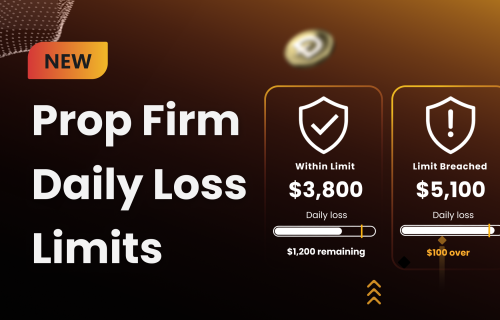
Prop Firm Daily Loss Limits: How to Configure and Enforce Them If
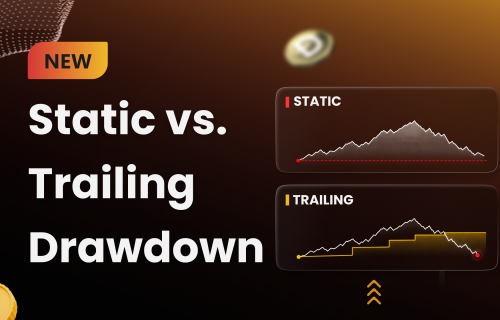
Static vs Trailing Drawdown: A Guide for Prop Firm Operators Static vs
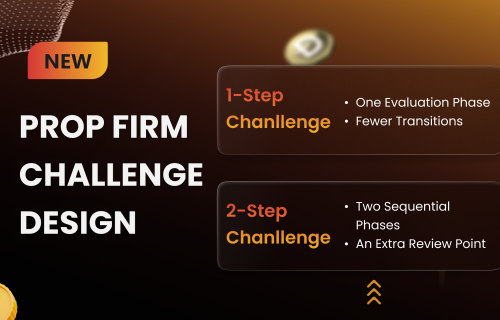
One-Step vs Two-Step Prop Challenges: A Guide for Prop Firm Operators If
Tell us about your project and we’ll schedule a demo with our product specialists.
By submitting, you agree to our privacy policy and consent to being contacted about opportunities.