

If you are setting prop firm daily loss limits, start with one practical question: what number represents the beginning of this trading day? Your answer drives the calculation. A daily loss control workflow should also state when the day resets. Once a breach happens, it should make the next step clear to the trader.
Two terms are used throughout. The daily limit is the maximum loss the rule allows within one trading day. A breach is the moment the daily loss reaches the limit.
A daily limit can protect a program from a sharp intraday loss. Some firms also use it to pause an account while the team reviews what happened. Decide that purpose first, because it shapes both the calculation and the response.
Daily loss and maximum drawdown rules answer different questions. A drawdown rule looks at the wider account boundary. A daily rule looks at what happened during one defined trading day. If you use both, make sure their inputs and account actions work together. A later section shows what that looks like in practice.
Before you publish a daily loss rule, choose three things: the starting reference, the current value, and how the limit is expressed.
The limit. A daily limit can be a fixed amount or a percentage. A 5% limit on a $100,000 account is a $5,000 limit. If you use a percentage, say what it applies to: the account’s starting balance, or the start-of-day reference. The two differ once the account has moved.
The starting reference. This is the value captured at the daily reset, and the loss is measured from it. State which value it is, because the balance-based and equity-based versions differ.
The current value. A balance-based rule can be written simply:
daily loss = start-of-day balance − current balance
An equity-based rule includes an open trade’s unrealized profit or loss in both values:
daily loss = start-of-day equity − current equity
Under an equity-based rule, start-of-day equity includes any position carried over from the previous day. Put your choice in the account terms, in the platform, and in the evidence used for a review. When those places use different definitions, a close case becomes hard to explain.
For example, take an account that starts the day at $100,000 with a $5,000 daily limit:
| Illustrative equity-based scenario | Start-of-day reference | Current equity | Daily loss | $5,000 limit | Result |
|---|---|---|---|---|---|
| Ordinary movement | $100,000 | $96,200 | $3,800 | $1,200 headroom | Continue under the configured policy |
| Limit breach | $100,000 | $94,900 | $5,100 | $100 beyond the limit | Apply the documented breach action |
Illustrative values only. The rule should state its time zone, reset behavior, and treatment of open positions before an account gets close to the limit.
Also decide whether reaching the limit exactly counts as a breach. In the table, the breach case is $100 beyond the limit, but an account that lands on exactly $95,000 needs a documented answer.
Fees can tip a close calculation over the limit. In this article, fees means commissions, overnight financing charges, and any other account charges. Decide how each one counts, then set the same approach for adjustments, credits, and manual account actions. Use it consistently when the account is reviewed.
A daily rule can measure loss from the start-of-day reference, or from the day’s highest value. The two give different results on the same day.
Assume the account starts at $100,000, rises to $103,000 during the session, then falls to $98,500. Measured from the start-of-day reference, the daily loss is $1,500. Measured from the intraday high, it is $4,500. The second version works like a trailing rule that resets every day, so it tightens the room available after a good morning.
Neither approach is wrong, but traders will read the rule differently under each. Choose one and state it plainly. Most programs measure from the start-of-day reference, which keeps the daily rule distinct from the drawdown rule.
“Daily” needs a real operating window. Choose the reset time and publish the time zone where traders can see it. If daylight saving affects that schedule, say how the program handles the change.
Also name the data source for the start-of-day snapshot, and say when the reference is fixed. A reference taken at the reset moment and a reference taken from the previous session’s final data can differ, particularly when a late fee or adjustment arrives after the reset.
The account record should show the same window that the trader sees. That becomes especially important when the program serves people in several regions or a review takes place near the reset.
An open trade is where the difference between balance and equity becomes visible. With an equity-based rule, a floating loss may reach the limit before the position closes. With a balance-based rule, the result may wait until that trade is closed.
Run one ordinary loss just below the limit and one case that reaches it while a position is still open. Then carry the second case over the reset. A late account update or a fee posted after the trade can reveal whether your program handles late data consistently when it settles the day’s numbers.
When an account breaches the daily limit, your trader and operations team should both know what happens next. Your program may show an alert first. Its policy may then restrict trading access or send the account for review.
The main design decision is whether a daily breach ends the account or only pauses it. These are configurable operating choices, and your terms should name the one you use:
Whichever you choose, show the trader which limit, reference, and calculation basis produced the result, and state when trading can resume, if it can.
Name the people who can review or override an event, and keep the reason for any manual exception on the account record. The real-time enforcement record gives the team a way to trace the daily reference, the calculation, and the decision that followed.
Because the two rules measure different things, one account event can bring either of them into play first. Take an account with a $100,000 start, a $10,000 static drawdown floor at $90,000, and a $5,000 daily limit. If the account falls to $94,900 during the day, the daily limit is breached while the account is still $4,900 above its drawdown floor. The daily rule acts first, and the drawdown rule is untouched.
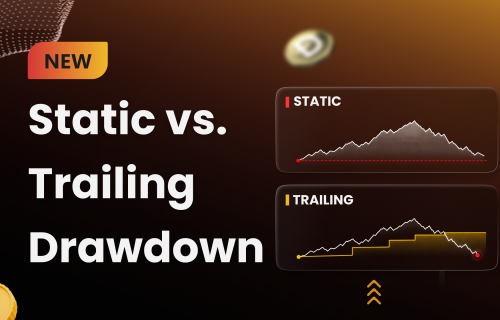
The reverse can also happen. A trailing floor that has risen close to the current balance can be reached before the daily limit. When one event reaches both at once, your terms should say which action applies. A sensible default is that the more serious action wins, but state it rather than leaving it to interpretation.
When a trader asks about a daily loss decision, your team should be able to pull up the start-of-day reference, the reset window, and the snapshot source. It should also find the values used in the calculation beside the account record. That makes a later review much easier.
Before you launch, test these things in a safe environment:
Run an ordinary loss and a limit breach through the same calculation the live program will use. That small exercise makes the daily limit tangible for both operators and traders.
days left to apply

Prop Firm Daily Loss Limits: How to Configure and Enforce Them If
Static vs Trailing Drawdown: A Guide for Prop Firm Operators Static vs

One-Step vs Two-Step Prop Challenges: A Guide for Prop Firm Operators If

If you are comparing a prop trading platform vs brokerage platform, it

White Label vs In-House Prop Trading Platform: Costs and Trade-Offs The choice

How to Choose a Prop Trading Technology Provider Choosing a prop trading
Tell us about your project and we’ll schedule a demo with our product specialists.
By submitting, you agree to our privacy policy and consent to being contacted about opportunities.