If you are choosing between one-step vs two-step prop challenges, start with the account journey you want to operate. Challenge structure is a product and operating decision. It shapes what your trader must understand and how you evaluate behavior. It also determines the number of account transitions and the likely support demand. Your program takes its full definition from the rules and account journey behind the chosen label.
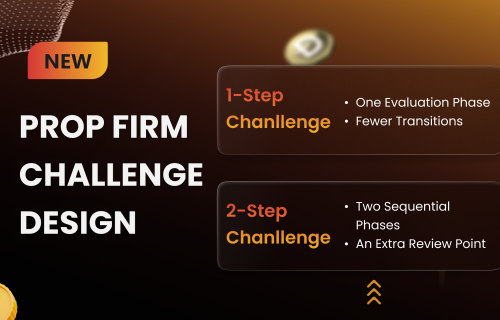
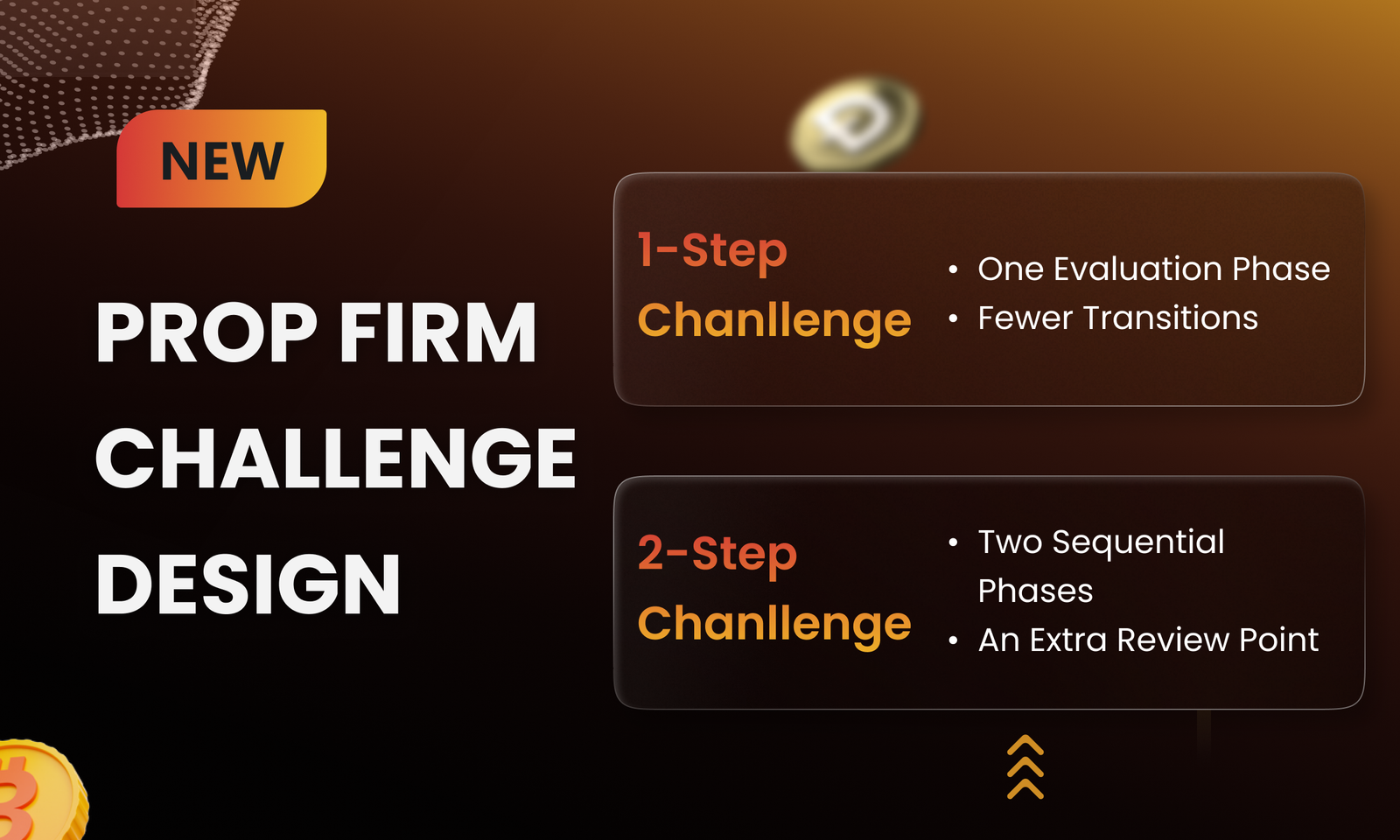
A one-step model places the evaluation in a single defined phase. The trader sees one set of objectives and constraints before reaching the next account state. This can make the proposition easier to explain and reduce the number of transitions the platform and support team must handle.
The key design work is still substantial. The firm must set the evaluation period and pass or fail conditions. It also needs a review process, a path for account progression, and an approach to exceptions. The resulting account history should also give the wider trader-evaluation framework enough context for later decisions.
A two-step model uses sequential phases, usually with separate objectives or conditions. It gives the operator an additional observation point before a trader progresses. It also adds account states and communication requirements. Support questions and configuration decisions increase with that extra transition.
Give the second phase a clear purpose. When it adds a distinct evaluation or operating value, the extra account transition earns its place in your program.
| Question | One-step structure | Two-step structure |
|---|---|---|
| Trader journey | One evaluation phase to understand | Sequential phases and transition criteria |
| Configuration | One phase plus progression outcome | Separate phase rules, transitions, and messages |
| Evaluation depth | One defined observation period | Additional opportunity to assess behavior across phases |
| Operations | Fewer account transitions | More states, notifications, and review points |
| Support | Questions concentrate around one rule set | Questions can occur at each phase and transition |
| Reporting | One challenge funnel | Phase-level conversion, breach, and progression views |
Before you choose a label, start with the business question the evaluation is meant to answer. It may assess consistency over time, rule adherence, or account-management behavior. Then specify how the configurable challenge phases and rules will evaluate that criterion.
Use a configuration checklist to define the calculation basis, evaluation period, and treatment of open positions. The configuration must also align with drawdown design, because its reference values and timing affect pass or fail outcomes. Breach actions, account transitions, and trader notifications complete the operating specification. Those details shape the experience more than a marketing label.
The following examples test the journey without presenting a commercial offer. Every value is illustrative.
| Illustrative configuration | One-step | Two-step |
|---|---|---|
| Evaluation path | One phase with an 8% profit target | Qualification phase at 8%, then a consistency phase at 5% |
| Risk settings | 5% daily loss; 10% maximum loss | 5% daily loss; 10% maximum loss in each phase |
| Minimum activity | Five trading days | Five trading days in phase one; three in phase two |
| Review point | Manual review after target completion | State transition review after each phase |
| Trader communication | Start, warning, completion, and review notices | Distinct phase and transition notices |
The point is to test whether the workflow and rule engine interpret the configuration in the same way as the trader dashboard and operations process.
Once your program is live, monitor the challenge funnel alongside purchases. Completion by phase and breach categories show where traders drop out. Time in each state and support demand add operating context. Manual reviews, retries, and later account behavior help explain the pattern.
Choose the structure that clarifies your evaluation purpose and rule set. It should also make the account lifecycle and operating responsibilities easy for your team to run. Use a demo to test the configuration against the journey you intend to operate.
days left to apply
Tell us about your project and we’ll schedule a demo with our product specialists.
By submitting, you agree to our privacy policy and consent to being contacted about opportunities.