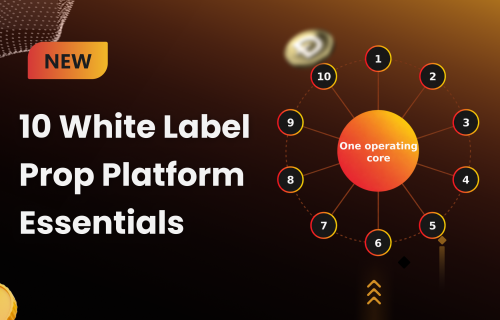
White label crypto exchange solutions are often the first alternative teams consider when deciding how to launch a trading platform but are they the right fit for your needs? If you’re building a crypto exchange in 2025, one of the first strategic decisions you’ll face is whether to use a white label platform or develop your own solution from the ground up. Both approaches can succeed but which one makes the most sense for your product, budget, and roadmap?
At TinyTrader, we’ve helped countless teams make this choice. Below is a direct comparison of the two paths covering costs, timelines, control, scalability, and long term flexibility.
A white label exchange is a fully developed backend and frontend solution that you can rebrand and launch as your own. It typically includes:
A ready-made matching engine
Wallet integrations
Admin control panels
Built-in KYC/AML compliance tools
Often hosted and maintained by the provider
TinyTrader’s white-label platform offers the feel of a custom-built solution—deep admin control, customizable UI, modular APIs, and flexible extensions—without the traditional complexity.
A custom exchange is designed entirely from scratch by your own dev team or a tech partner. You have complete control over every detail, including:
Architecture
User experience
Feature set
Deployment and scaling
| Feature | White Label | Custom Built |
|---|---|---|
| Time to Market | Days to weeks | 6–12 months |
| Cost | $50K- $250K/year (avg) | $300K–$1M+ upfront |
| Codebase Access | Partial or modular | Full |
| Customization | Limited to moderate | Full |
| Maintenance & Support | Included | In-house |
| Best For | Fast launch, MVPs, pilots | Full-scale, regulated ops |
White-label platforms are ideal if:
You want to go live fast and iterate post-launch
You’re focused on marketing, partnerships, or business development, not engineering
You’re testing a new market, model, or region
You have limited dev resources or startup capital
A custom build makes sense if:
You’re creating a regulated or licensed trading platform
You already have technical teams and funding
You require ultra-specific features, such as HFT optimization or novel derivatives
You’re scaling a mature fintech or crypto product
A hybrid approach is often the smartest move. If you:
Want fast time-to-market
But need a few custom modules or integrations
Then choose a modular white-label system like TinyTrader. You’ll get the speed of a ready-made platform with the flexibility to tailor critical components like trading interfaces, analytics, or partner features.
Choosing the right exchange infrastructure is a strategic lever—one that impacts your costs, velocity, flexibility, and long-term success. In 2025, the smartest teams know:
Start fast. Iterate smart. Scale when proven.
Whether you’re a solo founder or a web3-native fintech, white-label systems like TinyTrader offer the fastest path to market—without compromising on branding, compliance, or performance.
days left to apply
Tell us about your project and we’ll schedule a demo with our product specialists.
By submitting, you agree to our privacy policy and consent to being contacted about opportunities.