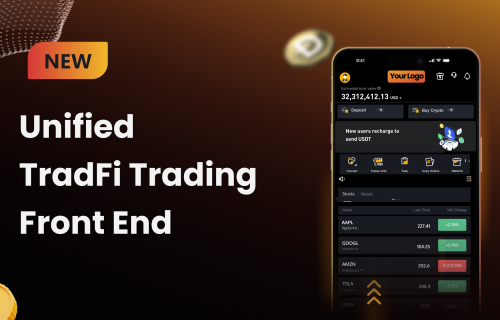
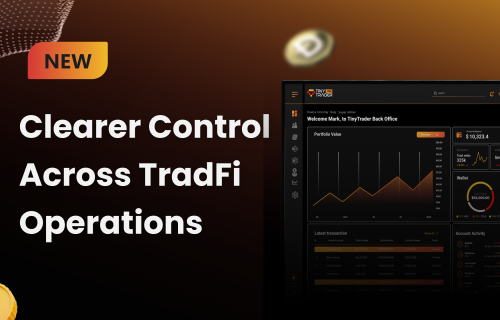
Fractional orders, real-balance-backed positions, and price-band checks give tokenized assets a cleaner spot trading path.

TinyTrader has upgraded its Fractional, Non-Leveraged TradFi Spot Order Engine. The release gives platforms a more efficient order layer for tokenized assets, combining high-performance matching with fractional access and spot-specific risk controls.
TradFi spot products should not be handled like perpetual contracts or synthetic derivatives. Platforms need order logic that supports granular quantities, real-balance-backed positions, order-size limits, price-band validation, and reliable synchronization between fills, user ledgers, and custody balances. TinyTrader brings these controls into a dedicated spot order workflow.
Tokenized assets often need more flexible order quantities than traditional whole-unit trading models. The upgraded order engine supports fractional-share and decimal-quantity orders, allowing platforms to process more granular order sizes for tokenized assets.
This is especially important for tokenized equities and other TradFi spot products where users may not trade only in whole-unit quantities. More flexible quantity precision helps platforms offer a more practical spot trading entry point.
TradFi spot products require an order model grounded in actual balances rather than leverage or synthetic exposure. TinyTrader enforces non-leveraged TradFi spot positions backed by real balances, with orders and positions handled around available account balances.
This keeps the trading model aligned with the nature of tokenized TradFi products and gives platform teams a clearer relationship between balances, positions, and execution records.
Platforms still need familiar order behavior when introducing a new asset category. The engine supports market orders and limit orders, covering the core order types used in spot trading workflows.
It also supports per-symbol minimum and maximum order sizes. Platforms can set order-size boundaries that fit the operating rules and trading requirements of each asset.
Order-entry controls are especially important when tokenized assets reference real-world market prices. TinyTrader validates orders against daily price bands and rejects out-of-range orders before they enter the matching flow.
This gives platforms a clearer price-protection layer for tokenized asset trading, helping order validation stay closer to the rules expected for real-world asset products.
Execution is only useful when the resulting records stay aligned across trading, accounting, and custody systems. After execution, fills are synchronized with user ledgers and custody balances.
This helps keep execution records, account activity, and custody-side balances aligned, giving platforms a more reliable foundation for account display, asset operations, and reconciliation workflows.
For platforms expanding into tokenized real-world assets, the order layer needs to combine familiar spot trading behavior with asset-specific controls. The Fractional, Non-Leveraged TradFi Spot Order Engine gives platforms a dedicated order layer for this use case.
The upgrade preserves high-performance matching while adding fractional access, real-balance enforcement, order-size controls, and daily price band validation, helping platforms expand TradFi spot products with more suitable trading rules.
TinyTrader continues to strengthen the matching, order validation, ledger synchronization, and custody balance modules that help trading platforms build more suitable experiences for tokenized TradFi spot products.
Book a demo to see how TinyTrader can help your platform build a fractional, non-leveraged TradFi spot order layer.
days left to apply
Tell us about your project and we’ll schedule a demo with our product specialists.
By submitting, you agree to our privacy policy and consent to being contacted about opportunities.