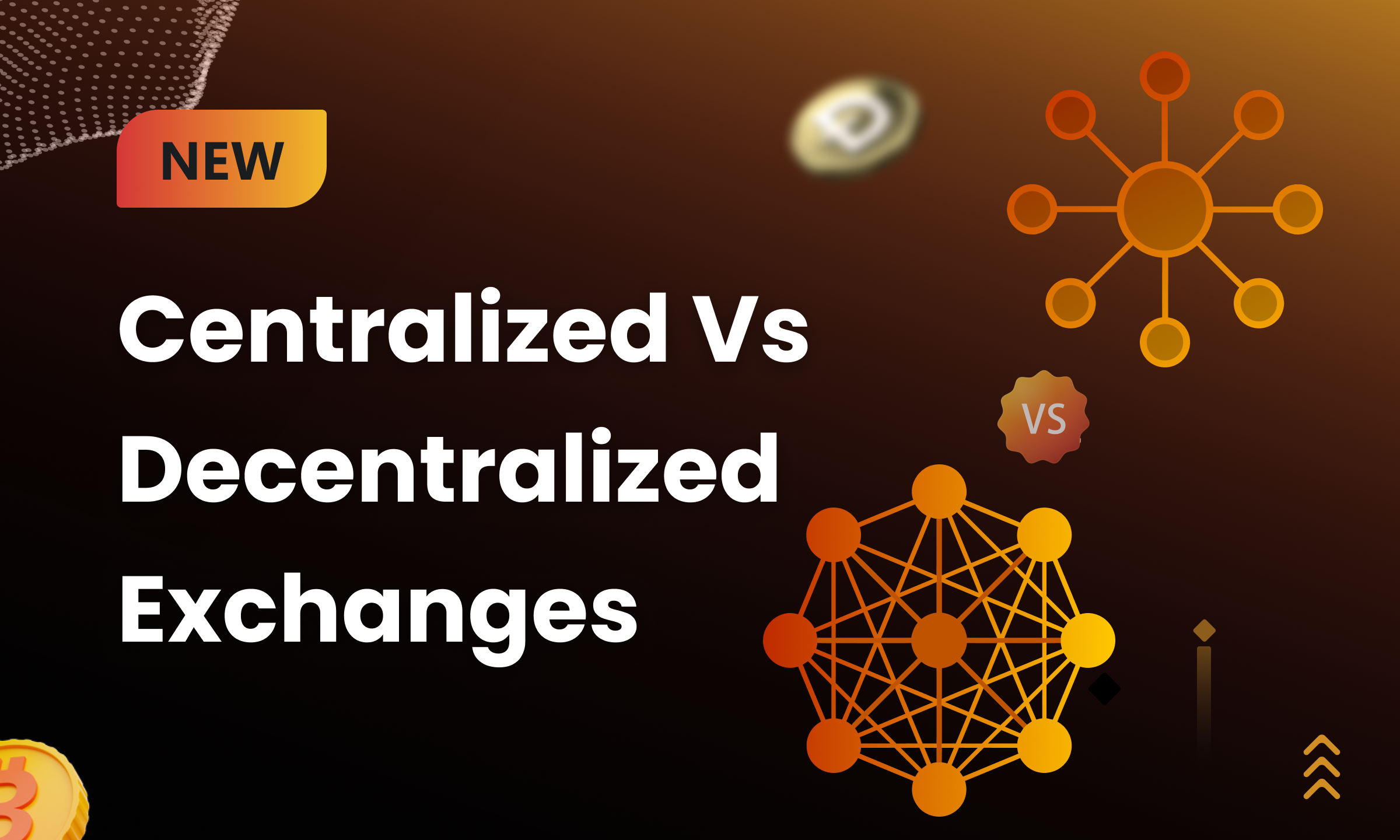
CEX and a DEX represent the first major architectural decision for entrepreneurs and institutional asset managers entering the crypto trading landscape. Before building a crypto exchange, businesses must decide whether a centralized exchange model, focused on control, liquidity, and operational efficiency, or a decentralized exchange model, focused on self-custody, transparency, and on-chain execution, best fits their trading strategy.
In the early days of crypto, this was treated as an ideological war CEX represented liquidity and convenience, while DEX represented ultimate sovereignty and transparency. Today, however, it is a purely strategic business decision.
Choosing the wrong model can lead to severe operational friction. A CEX requires robust risk handling and custody infrastructure, while a DEX demands complex multi-chain node configurations and automated market maker (AMM) optimization.
To help you determine which architecture aligns with your capital efficiency, monetization goals, and operational strengths, here is an institutional-grade breakdown of both frameworks.
A Centralized Exchange operates via an internal order book and a centralized custody database. The platform manages the user accounts, clears the trades off-chain, and provides lightning-fast execution.
Operating a CEX means acting as the financial gatekeeper. Your back office must feature institutional security architectures, such as Multi-Party Computation (MPC) cold storage orchestration and hourly anti-fraud internal ledger reconciliations to protect the exchange from malicious attacks.
A Decentralized Exchange shifts execution and custody directly to the blockchain. Users interact with automated liquidity pools or decentralized order books directly through smart contracts via non-custodial wallets.
A DEX’s profitability relies entirely on smart contract optimization and multi-chain node connectivity. Without a centralized database, your business infrastructure must be optimized to aggregate deep liquidity across various external automated pools to prevent user slippage during high-volatility events.
To assist your executive team in selecting the appropriate framework, consider how the two models compare across core operational vectors:
Strategic Dimension | Centralized Model (CEX) | Decentralized Model (DEX) |
Primary Revenue Streams | Trading fees, margin interest, structured financial products, IEO fees. | Swap fees, liquidity pool provisioning, token listing mechanics. |
Performance Capacity | 150,000+ TPS / 3ms ultra-low latency execution. | Constrained by underlying blockchain block times and gas fees. |
Asset Custody | Managed via institutional MPC & multi-sig vault setups. | Non-custodial; completely isolated via user smart contracts. |
System Customization | High; allows multi-ledger risk routing (A/B/C Book tracks). | Fixed by smart contract parameters and protocol governance. |
For modern crypto enterprises, the choice is no longer strictly binary. Sophisticated operators are increasingly adopting a hybrid approach.
By launching a high-performance CEX framework as the primary revenue and derivative trading core, while simultaneously deploying a non-custodial DEX network or Web3 wallet connection layer for decentralized asset management, businesses can capture 100% of the market volume.
This multi-track operational strategy ensures that whether your clients prioritize institutional execution speed or absolute asset self-sovereignty, your brand controls the infrastructure.
Choosing between a CEX or a DEX infrastructure doesn’t mean you have to compromise on scalability or security.
At TinyTrader, we empower crypto enterprises with a hyper-flexible, modular technology stack engineered over 7+ years of real-market evolutions. Whether your business logic requires an institutional-grade Centralized Exchange equipped with 150,000 TPS matching engines, dynamic A/B/C book risk-routing tools, and MPC vault control, or a multi-chain decentralized Web3 asset solution supporting over 50+ public chains and 120+ tokens, TinyTrader provides the turnkey infrastructure.
Tell us about your project and we’ll schedule a demo with our product specialists.
By submitting, you agree to our privacy policy and consent to being contacted about opportunities.